The Subterranean Network: Why Garden Mushrooms Signal High Soil Health
An empirical field guide for UK homeowners and estate gardeners. Learn how underground mycelium enriches turf biology, identify key lawn fungi, and manage surface fruiting organically.
Never consume wild lawn fungi based solely on digital photos or automated scanner apps. Certain toxic lawn species closely resemble deadly woodland outwash fungi. Always verify physical diagnostic markers (spore print, gill attachment, stem bruising, and scent) before handling or foraging.
I. The Biological Engine: Saprophytic Decomposition and Mycorrhizal Networks
When small white or brown caps suddenly appear across a manicured lawn after autumn rains, many homeowners instinctively reach for synthetic fungicides. However, mycological analysis reveals that surface fruiting bodies are merely the visible blossoms of an extensive, highly beneficial underground fungal network known as mycelium.
Lawn fungi fall primarily into two ecological categories that actively maintain topsoil vitality:
- Saprophytic Fungi: These organisms act as nature's primary recycling team. They secrete specialized enzymes that break down complex organic carbon—such as buried tree roots, dead grass clippings, and woody thatch—converting tough lignins into bioavailable humus and soil nutrients.
- Mycorrhizal Fungi: These species form symbiotic associations directly with grass root systems. In exchange for plant sugars, mycorrhizal hyphae extend the surface area of grass roots up to 1,000 times, harvesting subterranean water, phosphorus, and trace minerals that roots could otherwise never reach.
II. Visual Field Guide: Common Lawn & Garden Fungi
Understanding which species inhabit your lawn helps separate benign soil enhancers from potential toxicity hazards for pets and young children.
| Species & Botanical Name | Primary Substrate | Cap & Gill Features | Ecological Function & Warning |
|---|---|---|---|
| Field Mushroom Agaricus campestris |
Short turf, old pastures, organic-rich lawns. | Dry white convex cap. Free gills starting vivid pink, aging to deep chocolate brown. | Safe Saprophyte. Warning: Easily confused with Yellow Stainer (A. xanthodermus), which stains yellow at base and smells of carbolic ink. |
| Fairy Ring Champignon Marasmius oreades |
Mature grassland and established turf perimeters. | Buff-tan bell cap with central umbo (bump); widely spaced pale gills. | Produces classic fairy rings. Non-pathogenic, though dense fungal mats can repel surface water. |
| Shaggy Inkcap Coprinus comatus |
Disturbed topsoil, rich borders, new turf. | Tall white cylindrical cap covered in soft shaggy scales; rapidly deliquesces into black ink. | High-potency decomposer. Rapidly breaks down woody mulch and returns nitrogen to topsoil. |
| Lawn Mower's Mushroom Panaeolina foenisecii |
Standard residential lawns, shaded turf. | Small brown hemispherical cap drying to two-tone pale tan; mottled brown gills. | Benign decomposer of dead grass roots. Mildly Toxic: Causes digestive upset if raw caps are ingested by pets. |
III. Cultural Lawn Management: Addressing Thatch, Aeration, and Fairy Rings
If surface fruiting bodies become unsightly or dense fairy rings cause hydrophobic dry patches, cultural lawn maintenance resolves the root cause without applying toxic fungicides:
Mechanical Thatch Reduction
Excessive surface thatch (dead moss and runners) provides prime feedstocks for saprophytes. Scarify lawns annually in early autumn with a mechanical scarifier to strip excess organic food sources.
Hollow-Tine Aeration
Compacted, waterlogged soil creates anaerobic conditions favored by surface fungi. Drive hollow-tine coring aerators 75–100mm into the turf bed to extract soil plugs and restore soil oxygen levels.
Managing Hydrophobic Rings
Type 1 fairy rings can create a dense mycelial mat that repels water. Spike the affected ring thoroughly with a garden fork and drench with water combined with a mild organic wetting agent.
IV. Field Action Tools & Master Reference Book
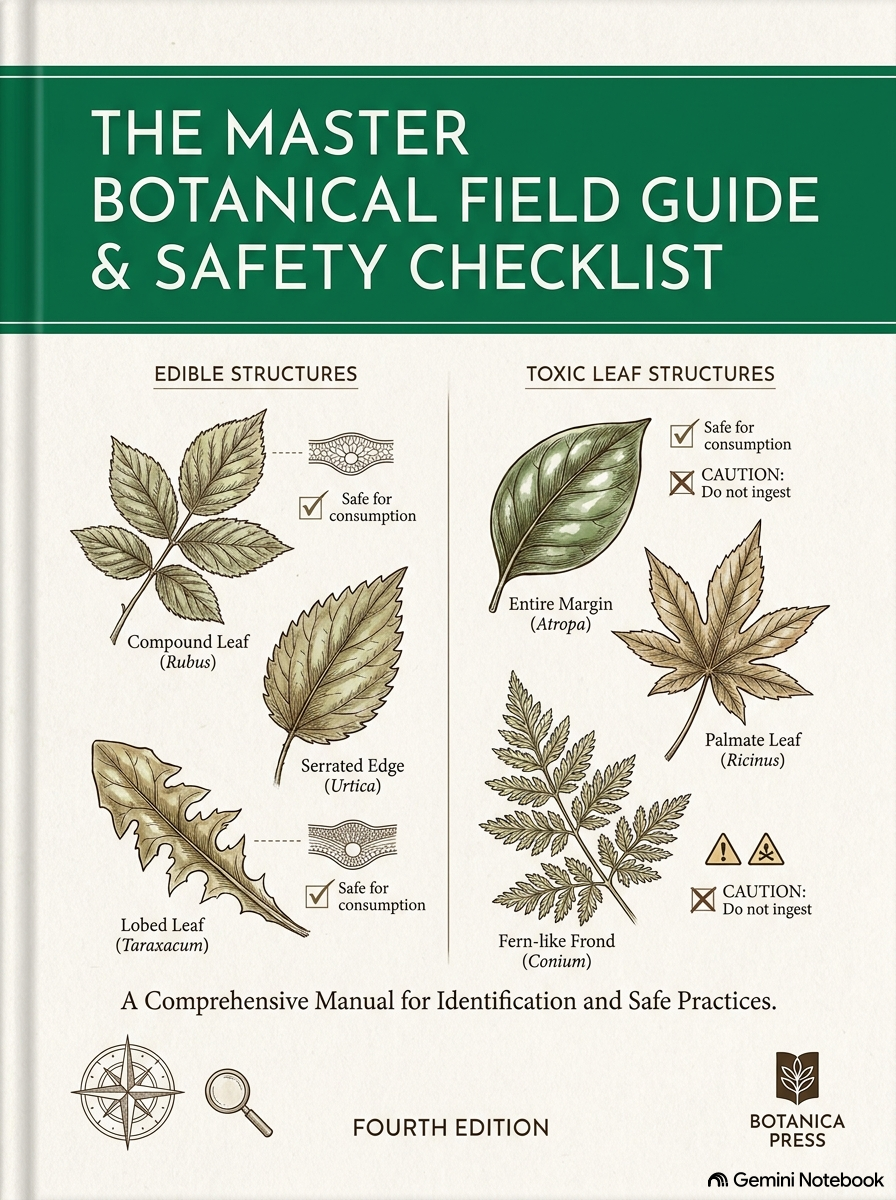
The Master Botanical Field Guide & Safety Reference Manual (13 Pages)
A 13-page technical reference manual engineered to prevent toxic plant misattribution during field identification. Built on side-by-side morphological comparison matrices, chemical deactivation protocols, and structural permaculture garden layouts.
Download Master Reference (£8.00) →